Can People of the Same Gender Make Babies?
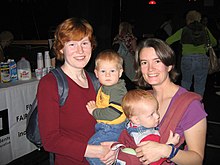
Lesbian couple with children
LGBT parenting refers to lesbian, gay, bisexual, and transgender (LGBT) people raising one or more than children as parents or foster care parents. This includes: children raised past aforementioned-sex couples (aforementioned-sex parenting), children raised by single LGBT parents, and children raised by an contrary-sexual activity couple where at to the lowest degree i partner is LGBT.
Opponents of LGBT rights have argued that LGBT parenting adversely affects children. However, scientific research consistently shows that gay and lesbian parents are as fit and capable as heterosexual parents, and their children are as psychologically healthy and well-adapted as those reared past heterosexual parents.[1] [two] [3] [4] [5] Major associations of mental health professionals in the U.S., Canada, and Australia have not identified credible empirical enquiry that suggests otherwise.[five] [six] [7] [8] [9]
Forms [edit]

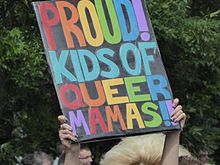
LGBT people can become parents through diverse means including current or former relationships, coparenting, adoption, foster care, donor insemination, reciprocal IVF, and surrogacy.[10] [11] A gay man, a lesbian, or a transgender person who transitions later in life may have children within an opposite-sexual practice relationship, such every bit a mixed-orientation matrimony, for various reasons.[12] [13] [14] [fifteen] [xvi] [17] [18]
Some children practise not know they take an LGBT parent; coming out bug vary and some parents may never reveal to their children that they place as LGBT. Appropriately, how children reply to their LGBT parent(s) coming out has little to do with their sexual orientation or gender identification of choice, simply rather with how either parent responds to acts of coming out; i.e. whether in that location is dissolution of parental partnerships or rather if parents maintain a salubrious, open, and communicative relationship after coming out or during transition in the example of trans parents.[nineteen] [20] [21]
Many lesbian, gay, bisexual, and transgender people are parents. In the 2000 U.S. Census, for example, 33 percent of female same-sex couple households and 22 percent of male same-sex couple households reported at least one child nether the age of 18 living in the domicile.[22] As of 2005, an estimated 270,313 children in the United States live in households headed past same-sex activity couples.[23]
Adoption [edit]
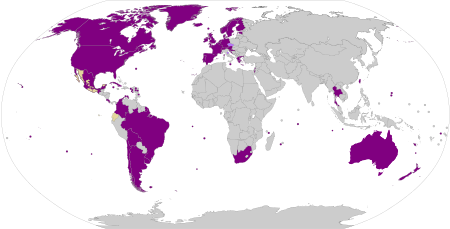
Legal condition of adoption by same-sex couples effectually the earth:
Articulation adoption allowed
No laws assuasive adoption by aforementioned-sexual activity couples and no same-sex activity marriage
Same-sexual practice marriage but adoption past married same-sex couples not allowed
Joint adoption by same-sex couples is legal in 27 countries and in some sub-national territories. Furthermore, 5 countries have legalized some form of stride-child adoption. Institutional heterosexism can be observed in adoption policies in many parts of the world: some countries or states explicitly prohibit adoption past openly lesbian, gay or bisexual people. Other jurisdictions make decisions well-nigh whether LGBTQ people may prefer on a case-by-case basis, with great variability betwixt agencies depending upon the focus of the agency (special needs children, infants, etc.), the religious affiliation of the agency if any, and the disposition of area supervisors and placement workers. In that location are as well legal barriers to international adoptions, since currently no countries which are actively involved in international adoption (eastward.g. People's republic of china, Guatemala) permit adoption by openly identified lesbian and gay people. Bisexual, transgender and transsexual people are not typically explicitly named, simply are presumably included in these prohibitions.[24]
Judgements [edit]
Sandy Schuster and Madeleine Isaacson, who met at their Pentecostal church, won America's starting time custody battle in favor of a lesbian couple in 1978.[25] [26]
In January 2008, the European Court of Human Rights ruled that an otherwise legally qualified and suitable candidate must not be excluded from adopting based on their sexual orientation.[27]
In 2010 a Florida courtroom declared that "reports and studies find that at that place are no differences in the parenting of homosexuals or the aligning of their children", therefore the Court is satisfied that the issue is and then far beyond dispute that it would be irrational to concord otherwise. [28]
Fulton vs. Urban center of Philadelphia [edit]
Fulton vs. Philadelphia is a Supreme Courtroom example between Catholic Social Services (CSS) and the city of Philadelphia that took identify from November four, 2020, to June 17, 2021.[29] The city's contracts with adoption agencies prohibit bigotry of LGBTQ couples by law. The city of Philadelphia ended its contract with CSS because the agency refused to consider LGBTQ couples when screening for foster care parents, stating that their actions were due to the religious conventionalities that union is between a human and a woman. CSS operates other types of foster intendance services, similar group homes, and received millions of dollars from Philadelphia regardless of the dismissal of their contract.[xxx] In the court case, CSS claimed that the dismissal of their contract with the city was impeding on their Beginning Amendment right.[thirty] The lawyer for Philadelphia, Neal Katyal, argued that, "Y'all can't on Monday sign a contract that says we won't discriminate and on Tuesday go ahead and discriminate."[30] The case also aimed to overturn a prior Supreme Courtroom case, Employment Division vs. Smith (1990), which concluded that the authorities'south neutral enforcement of a general law is legitimate fifty-fifty if it negatively impacts a religious party.[30] The court ruled that Philadelphia's decision to dismiss the contract violated the rights granted by the Free Do Clause of the First Amendment.[31] Despite siding with CSS in Fulton vs. Urban center of Philadelphia, the courtroom did non overturn the 1990 instance ruling.
Surrogacy [edit]
Some gay couples decide to accept a surrogate pregnancy. A surrogate is a person with a womb (perchance a parent) carrying an egg fertilized by sperm, given by a donor or given by a partner. Some people become surrogates for coin, others for humanitarian reasons or both.[32] Parents who use surrogacy services can be stigmatized.[33]
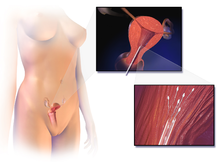
Schematic illustration of an AI process
Insemination [edit]
Insemination is a method used mostly by lesbian couples.[ commendation needed ] It is when a partner is fertilised with donor sperm injected through a syringe. Some people who produce sperm donate information technology for humanitarian reasons, others for money or both. In some countries, the donor can cull to be anonymous (for instance in Spain) and in others, they cannot take their identity withheld (United kingdom of great britain and northern ireland).
Reciprocal IVF [edit]
Reciprocal IVF is used by couples who both possess female reproductive organs. Using in vitro fertilization, eggs are removed from one partner to be used to make embryos that the other partner will hopefully carry in a successful pregnancy.[11]
Developing methods [edit]
Currently scientists conduct enquiry on alternative types of human parenthood which can help same-sexual practice couples to take children.[34] One of the possibilities is obtaining sperm from skin stem cells.[35]
Statistics [edit]
According to U.S. Census Snapshot published in December 2007, same-sexual practice couples with children have significantly fewer economic resources and significantly lower rates of homeownership than heterosexual married couples.[23]
According to a 2013–14 survey conducted in Poland by the Plant of Psychology of the Smoothen University of Sciences (IP PAN) on 3000 LGBT people in same-sexual practice relationships living in the country, 9% (11.7% of women and 4.6% of men) of coupled LGBT people were parents.[36] The 2011 Canadian Census had similar conclusions to these of the Polish study: 9.4% of Canadian gay couples were bringing up children.[37]
Inquiry [edit]
Scientific research consistently shows that gay and lesbian parents are every bit fit and capable as heterosexual parents, and their children are as psychologically good for you and well-adjusted as those reared by heterosexual parents.[1] [2] [5] Major associations of mental wellness professionals in the U.S., Canada, and Australia take non identified credible empirical research that suggests otherwise.[5] [6] [vii] [8] [9]
In the U.s.a., studies on the consequence of gay and lesbian parenting on children were first conducted in the 1970s, and expanded through the 1980s in the context of increasing numbers of gay and lesbian parents seeking legal custody of their biological children.[38]
Children and immature adults with LGBTQ parents are uniquely defined by the fact that they typically identify as heterosexual, but as a function of their membership in an LGBTQ-parent family, they are exposed to minority stress and experience the furnishings of adulthood. Thus, a fundamental question in this report is, How exercise young adults with LGBTQ parents explain their sense of connectedness to or disconnection from the LGBTQ community, both as children (while growing upwardly with LGBTQ parents) and as immature adults?[39]
Regarding the transmission of gender roles, LGBTQ parents are caught between two contrasting images: ''they are portrayed as either inherently different from, or essentially the aforementioned as, heterosexual families''. Lesbians are either seen as a threat to heternormativity considering they are militant, anti-male feminists, or as peculiarly prophylactic caregivers considering they are two loving, nurturing women, who are unlikely to be sexually abusive. Gay men are also caught between these two contrasting images. On one paw they practise not take women's ''natural'' ability to intendance for children, are perceived as sexually (over)active and potentially predatory and, like lesbians, as well political; on the other manus they are more maternal and more than feminine than heterosexual men.[40]
The underlying assumption is that gay men and lesbians are different in some essential way from heterosexual people, and this difference implicates their abnormal gender expression. Therefore, they are unable to model appropriate gender behavior to their children, for example, the assumption that gay fathers are unable to bathe their daughters or discuss puberty and menstruation.[40]
Methodology [edit]
Studies of LGBT parenting have sometimes suffered from minor and/or non-random samples and inability to implement all possible controls, due to the small LGBT parenting population and to cultural and social obstacles to identifying as an LGBT parent.
A 1993 review published in the Journal of Divorce & Remarriage identified fourteen studies addressing the effects of LGBT parenting on children. The review ended that all of the studies lacked external validity and that therefore: "The determination that there are no significant differences in children reared by lesbian mothers versus heterosexual mothers is not supported by the published research database."[41]
Fitzgerald'due south 1999 analysis explained some methodological difficulties:
Many of these studies endure from similar limitations and weaknesses, with the main obstacle being the difficulty in acquiring representative, random samples on a nearly invisible population. Many lesbian and gay parents are non open virtually their sexual orientation due to existent fears of discrimination, homophobia, and threats of losing custody of their children. Those who practise participate in this type of research are usually relatively open nigh their homosexuality and, therefore, may bias the enquiry towards a particular group of gay and lesbian parents.
Because of the inevitable utilize of convenience samples, sample sizes are normally very small and the bulk of the research participants end up looking quite homogeneous—e.g. white, center-course, urban, and well-educated. Some other pattern is the broad discrepancy betwixt the number of studies conducted with children of gay fathers and those with lesbian mothers...
Another potential factor of importance is the possibility of social desirability bias when research subjects respond in ways that present themselves and their families in the near desirable light possible. Such a phenomenon does seem possible due to the want of this population to commencement and reverse negative images and discrimination. Consequently, the findings of these studies may be patterned past self-presentation bias.[38]
According to a 2001 review of 21 studies by Stacey and Biblarz published in American Sociological Review: "[R]esearchers lack reliable data on the number and location of lesbigay parents with children in the general population, there are no studies of child development based on random, representative samples of such families. Near studies rely on modest-scale, snowball and convenience samples were drawn primarily from personal and community networks or agencies. Most enquiry to date has been conducted on white lesbian mothers who are insufficiently educated, mature, and reside in relatively progressive urban centers, most frequently in California or the Northeastern states."[42]
In more than recent studies,[43] many of these issues have been resolved due to factors such as the changing social climate for LGBT people.
Herek'south 2006 newspaper in American Psychologist stated:
The overall methodological sophistication and quality of studies in this domain accept increased over the years, every bit would be expected for any new surface area of empirical enquiry. More recent inquiry has reported information from probability and community-based convenience samples, has used more rigorous assessment techniques, and has been published in highly respected and widely cited developmental psychology journals, including Child Evolution and Developmental Psychology. Data are increasingly bachelor from prospective studies. In add-on, whereas early on study samples consisted mainly of children originally born into heterosexual relationships that subsequently dissolved when one parent came out as gay or lesbian, recent samples are more likely to include children conceived within a aforementioned-sex relationship or adopted in infancy by a aforementioned-sex activity couple. Thus, they are less likely to derange the furnishings of having a sexual minority parent with the consequences of divorce.[7]
A 2002 review of the literature identified 20 studies examining outcomes among children raised past gay or lesbian parents and found that these children did not systematically differ from those raised by heterosexual parents on any of the studied outcomes.[44]
In a 2009 affirmation filed in the case Gill v. Office of Personnel Management, Michael Lamb, a professor of psychology and head of Department of Social and Developmental Psychology at Cambridge University, stated:
The methodologies used in the major studies of aforementioned-sex parenting see the standards for inquiry in the field of developmental psychology and psychology generally. The studies specific to aforementioned-sexual activity parenting were published in leading journals in the field of child and boyish development, such as Child Development, published by the Society for Inquiry in Child Evolution, Developmental Psychology, published by the American Psychological Clan, and The Periodical of Child Psychology and Psychiatry, the flagship peer-review journals in the field of child development. Most of the studies appeared in these (or similar) rigorously peer-reviewed and highly selective journals, whose standards stand for expert consensus on more often than not accepted social scientific standards for research on child and boyish development. Prior to publication in these journals, these studies were required to go through a rigorous peer-review process, and as a result, they institute the blazon of research that members of the corresponding professions consider reliable. The torso of research on same-sex families is consistent with standards in the relevant fields and produces reliable conclusions."[45]
Gartrell and Bos's 25-year longitudinal study, published 2010, was limited to mothers who sought donor insemination and who may have been more motivated than mothers in other circumstances.[46] Gartrell and Bos annotation that the study's limitations included utilizing a non-random sample, and the lesbian grouping and command group were not matched for race or surface area of residence.[47]
Michael J. Rosenfeld, associate professor of sociology at Stanford Academy, wrote in a 2010 study published in Census that "[A] critique of the literature—that the sample sizes of the studies are too pocket-size to permit for statistically powerful tests—continues to be relevant." Rosenfeld'due south study, "the first to use large-sample nationally representative data," found that children of same-sex couples demonstrated normal outcomes in schoolhouse. "The core finding here," reports the study," offers a measure of validation for the prior, and much-debated, small-sample studies."[48]
According to a 2005 brief by the American Psychological Association:
In summary, research on diversity amidst families with lesbian and gay parents and on the potential furnishings of such diversity on children is still sparse (Martin, 1993, 1998; Patterson, 1995b, 2000, 2001, 2004; Perrin, 2002; Stacey & Biblarz, 2001; Tasker, 1999). Data on children of parents who identify as bisexual are nonetheless not available, and information about children of not-White lesbian or gay parents is hard to notice (but see Wainright et al., 2004, for a racially diverse sample)... However, the existing data are still limited, and any conclusions must exist seen equally tentative... It should be acknowledged that enquiry on lesbian and gay parents and their children, though no longer new, is even so limited in extent. Although studies of gay fathers and their children have been conducted (Patterson, 2004), less is known well-nigh children of gay fathers than about children of lesbian mothers. Although studies of adolescent and young adult offspring of lesbian and gay parents are available (e.g., Gershon et al., 1999; Tasker & Golombok, 1997; Wainright et al., 2004), relatively few studies have focused on the offspring of lesbian or gay parents during boyhood or machismo.[49]
In 2010 American Psychological Association, The California Psychological Association, The American Psychiatric Association, and the American Association for Marriage and Family Therapy stated:
Relatively few studies have directly examined gay fathers, simply those that be find that gay men are similarly fit and able parents, as compared to heterosexual men. Available empirical data practice not provide a basis for bold gay men are unsuited for parenthood. If gay parents were inherently unfit, even small studies with convenience samples would readily detect it. This has not been the case. Existence raised past a single male parent does not appear to inherently disadvantage children's psychological wellbeing more than being raised by a single mother. Homosexuality does not constitute a pathology or deficit, and in that location is no theoretical reason to look gay fathers to cause harm to their children. Thus, although more research is needed, available data place the burden of empirical proof on those who argue that having a gay male parent is harmful.[v]
A significant increase in methodological rigor was achieved in a 2020 report past Deni Mazrekaj at Academy of Oxford, Kristof De Witte and Sofie Cabus at KU Leuven published in the American Sociological Review.[43] The authors used administrative longitudinal information on the unabridged population of children built-in between 1998 and 2007 in the Netherlands, which was the first country to legalize same-sexual practice marriage. They followed the educational performance of 2,971 children with aforementioned-sexual practice parents and over a million children with dissimilar-sex parents from nativity. This was the first study to address how children who were actually raised by same-sex activity parents from nativity (instead of happening to live with a same-sex couple at some bespeak in time) perform in school while retaining a large representative sample. The authors found that children raised by same-sex parents from nascence perform amend than children raised past different-sex parents in both primary and secondary education. Co-ordinate to the authors, a major factor explaining these results was parental socioeconomic status. Same-sex couples often accept to apply expensive fertility treatments and adoption procedures to have a child, meaning they tend to be wealthier, older and more educated than the typical different-sex couple. All the same, the study concluded that the positive effects of being raised past same-sexual practice parents still remained later on controlling for socioeconomic status, though they did lessen. The authors hypothesize that homophobic bigotry could cause same-sex parents to compensate past investing more time and energy into their children.
Consensus [edit]
Scientific research that has directly compared outcomes for children with gay and lesbian parents with outcomes for children with heterosexual parents has found that children raised by same-sex couples are as physically or psychologically healthy, capable, and successful as those raised by contrary-sex activity couples,[1] [2] [5] despite the reality that considerable legal discrimination and inequity remain significant challenges for these families.[2] Major associations of mental health professionals in the U.S., Canada, and Australia, accept not identified credible empirical enquiry that suggests otherwise.[5] [six] [7] [8] [9] Sociologist Wendy Manning echoes their decision that "[The] studies reveal that children raised in aforementioned-sex parent families fare only too every bit children raised in different-sex parent families across a wide spectrum of child well-beingness measures: academic performance, cognitive development, social development, psychological health, early sex, and substance abuse."[50] The range of these studies allows for conclusions to be drawn beyond any narrow spectrum of a child's well-beingness, and the literature further indicates that parents' financial, psychological and physical well-being is enhanced by marriage and that children benefit from being raised by 2 parents within a legally recognized union.[v] [6] [45] [51] There is evidence that nuclear families with homosexual parents are more egalitarian in their distribution of domicile and childcare activities, and thus less likely to embrace traditional gender roles.[52] Nonetheless, the American University of Pediatrics reports that there are no differences in the interests and hobbies between children with homosexual versus heterosexual parents.[53]
Since the 1970s, it has go increasingly clear that it is family processes (such every bit the quality of parenting, the psychosocial well-being of parents, the quality of and satisfaction with relationships within the family, and the level of co-operation and harmony between parents) that contribute to determining children's well-being and outcomes rather than family structures, per se, such as the number, gender, sexuality and cohabitation status of parents.[2] [45] Since the end of the 1980s, as a result, it has been well established that children and adolescents can be as well-adjusted in nontraditional settings equally in traditional settings.[45] Furthermore, whereas factors such as the number and cohabitation status of parents tin can and practise influence human relationship quality in aggregate, the same has not been demonstrated for sexuality. According to sociologist Judith Stacey of New York University, "Rarely is there as much consensus in any expanse of social science as in the instance of gay parenting, which is why the American Academy of Pediatrics and all of the major professional organizations with expertise in kid welfare have issued reports and resolutions in back up of gay and lesbian parental rights".[54] These organizations include the American Academy of Pediatrics,[6] the American Academy of Child and Adolescent Psychiatry,[55] the American Psychiatric Clan,[56] the American Psychological Association,[57] the American Association for Union and Family Therapy,[58] the American Psychoanalytic Association,[59] the National Association of Social Workers,[60] the Kid Welfare League of America,[61] the North American Quango on Adoptable Children,[62] and Canadian Psychological Clan.[63] In 2006, Gregory M. Herek stated in American Psychologist: "If gay, lesbian, or bisexual parents were inherently less capable than otherwise comparable heterosexual parents, their children would evidence issues regardless of the type of sample. This pattern conspicuously has not been observed. Given the consistent failures in this research literature to disprove the null hypothesis, the burden of empirical proof is on those who argue that the children of sexual minority parents fare worse than the children of heterosexual parents."[seven]
Studies and analyses include Bridget Fitzgerald'southward 1999 assay of the inquiry on gay and lesbian parenting, published in Wedlock and Family Review, which found that the available studies generally concluded that "the sexual orientation of parents is not an constructive or important predictor of successful babyhood development"[38] and Gregory Chiliad. Herek'due south 2006 analysis in American Psychologist, which said: "Despite considerable variation in the quality of their samples, research design, measurement methods, and data analysis techniques, the findings to appointment accept been remarkably consistent. Empirical studies comparison children raised by sexual minority parents with those raised by otherwise comparable heterosexual parents have not found reliable disparities in mental health or social adjustment. Differences have not been constitute in parenting ability between lesbian mothers and heterosexual mothers. Studies examining gay fathers are fewer in number but do not bear witness that gay men are whatsoever less fit or able equally parents than heterosexual men."[seven] Additionally, some fear that children will inherit their parent's gender dysphoria or alternate mental health issues in the case of trans parent, nonetheless there is research that suggests "an absence of evidence that children raised by transgendered parents take a greater run a risk of experiencing […] development problems than raised by not-transgender parents" and further clinical research shows that "children of gender-variant parents do not develop gender dysphoria or mental diseases" due to their parents' diagnosis with gender identity disorder [21] A 1996 meta-assay found "no differences on any measures between the heterosexual and homosexual parents regarding parenting styles, emotional aligning, and sexual orientation of the kid(ren)";[64] and a 2008 meta-analysis reached similar conclusions.[65]
In June 2010, the results of a 25-year ongoing longitudinal study by Nanette Gartrell of the University of California and Henny Bos of the Academy of Amsterdam were released. Gartrell and Bos studied 78 children conceived through donor insemination and raised by lesbian mothers. Mothers were interviewed and given clinical questionnaires during pregnancy and when their children were 2, 5, 10, and 17 years of age. In the abstract of the written report, the authors stated: "According to their mothers' reports, the 17-year-onetime daughters and sons of lesbian mothers were rated significantly higher in social, school/academic, and total competence and significantly lower in social problems, rule-breaking, aggressive, and externalizing problem behavior than their age-matched counterparts in Achenbach's normative sample of American youth."[47]
Analysis of extensive social science literature into the question of children's psychological outcomes of being raised by same-sex parents past the Australian Institute of Family Studies in 2013 concluded that "there is now strong testify that same-sex parented families constitute supportive environments in which to enhance children" and that with regard to lesbian parenting "...clear benefits appear to exist with regard to: the quality of parenting children experience in comparing to their peers parented in heterosexual couple families; children's and young adults' greater tolerance of sexual and gender variety; and gender flexibility displayed past children, peculiarly sons."[66]
Sexual orientation and gender role [edit]
Reviews of data from studies thus far suggest that children reared by non-heterosexual parents have outcomes similar to those of children reared by heterosexual parents with respect to sexual orientation.[67] According to the U.S. Demography, eighty% of the children existence raised by same-sex couples in the U.s.a. are their biological children.[68] Regarding biological children of non-heterosexuals, a 2016 review atomic number 82 past J. Michael Bailey states "We would expect, for example, that homosexual parents should be more probable than heterosexual parents to have homosexual children on the basis of genetics solitary", since there is some genetic contribution to sexual orientation, and parents and children share 50 per centum of their genes.[67]
Important observations from inquiry on twins separated at birth and large adoption studies, is that parents tend to have picayune to no environmental furnishings on their children's behavioural traits, which are instead correlated with genes shared betwixt parent and child and the non-shared environment (environment which is unique to the child, such as random developmental noise and events, every bit opposed to rearing).[67] The 2016 Bailey et al. review concludes that there "is good evidence for both genetic and nonsocial environmental influences on sexual orientation" including prenatal developmental events, but that at that place is amend bear witness for biological mechanisms relating to male sexual orientation, which appears unresponsive to socialization, saying "we would exist surprised if differences in social surroundings contributed to differences in male person sexual orientation at all."[67] : 87 In dissimilarity, they say that female person sexual orientation may exist somewhat responsive to social environment, proverb "it would also exist less surprising to u.s.a. to discover that social surround affects female sexual orientation and related behavior, that possibility must be scientifically supported rather than assumed."[67] : 87
A 2013 statement from the American Academy of Child and Boyish Psychiatry states that children of LGBT parents practice not take any differences in their gender office behaviors in comparison to those observed in heterosexual family structures.[69]
A 2005 review by Charlotte J. Patterson for the American Psychological Association plant that the available information did not suggest higher rates of homosexuality among the children of lesbian or gay parents.[49] Herek'southward 2006 review describes the available data on the bespeak as limited.[7] Stacey and Biblarz and Herek stress that the sexual orientation and gender identification of children is of limited relevance to discussions of parental fettle or policies based on the same. In a 2010 review comparison single-father families with other family types, Stacey and Biblarz state, "We know very piffling still about how parents influence the development of their children's sexual identities or how these intersect with gender."[seventy] When information technology comes to family socialization processes and "contextual effects," Stacey and Biblarz say that children with such parents are more than probable to grow upward in relatively more than tolerant school, neighborhood, and social contexts.[42]
Social challenges and support systems [edit]

Lesbian couple with child
Children may struggle with negative attitudes about their parents from the harassment they may encounter by living in society.[71] At that place are many risks and challenges that tin occur for children of LGBT families and their parents in Northward America, including those in the private domain, family domain, and community/school domain.[72] Hegemonic social norms tin can lead some children to struggle in all or several domains.[73] Social interactions at school, extracurricular activities, and religious organizations tin can promote negative attitudes towards their parents and themselves based on gender and sexuality.[73] Bias, stereotypes, micro-aggressions, damage, and violence that both students and parents tin can often come across are a event of identifying outside of social normative, cis-gendered, heterosexual society or having their identity used as a weapon against them.[74] [75]
The forms of harm and violence that LGBT young people tin experience include physical harm and harassment, cyber harassment, assail, bullying, micro-aggressions and beyond. Due to the increased chance of harm experienced, children of LGBT parents and LGBT students can also feel increased levels of stress, anxiety, and cocky-esteem problems.[76] [74] Several legal and social protections back up children and parents who experience transphobia and homophobia in the community, school, and family unit.[77] Practicing and developing supportive networks within schools and working towards resilience skills can assist in creating safe environments for students and parents.[77] Social supports, ally development, and positive school environments are direct ways to challenge homophobia and transphobia directed at these students and their families. Several networks and school clubs can be fix and led by student youth to create positive school environments and community environments for LGBT students and their families.[72] Organizations such as Gay-Straight Alliance Network (GSA), American Ceremonious Liberties Spousal relationship(ACLU), and Gay, Lesbian, and Direct Education Network (GLSEN) can aid in supportive school environments. Community resources for LGBT children and parents such equally the Human Rights Entrada (HRC), The Trevor Project, and Parents, Families, and Friends of Lesbians and Gays (PFLAG) can assist in building personal support systems.[78] [73]
Other [edit]
Stephen Hicks, a reader in health and social care at the University of Salford[79] questions the value of trying to establish that lesbian or gay parents are defective or suitable. He argues such positions are flawed because they are informed by ideologies that either oppose or back up such families.[fourscore] In Hicks' view:
Instead of request whether gay parenting is bad for kids, I think we should ask how contemporary discourses of sexuality maintain the very idea that lesbian and gay families are essentially different and, indeed, deficient. Simply, in order to ask this, I think that nosotros need a wider range of enquiry into lesbian and gay parenting... More work of this sort will help the states to ask more circuitous questions almost forms of parenting that continue to offer some novel and challenging approaches to family life.[80]
Misrepresentation by opponents [edit]
In a 2006 statement, the Canadian Psychological Association released an updated argument on their 2003 and 2005 conclusions, proverb, "The CPA recognizes and appreciates that persons and institutions are entitled to their opinions and positions on this effect. However, CPA is concerned that some persons and institutions are misinterpreting the findings of psychological research to support their positions when their positions are more than accurately based on other systems of belief or values."[one] Several professional organizations have noted that studies which opponents of LGBT parenting claim equally bear witness that same-sexual practice couples are unfit parents exercise non in fact address aforementioned-sex parenting, still, and therefore practice non permit any conclusions to be drawn most the effects of the sexes or sexual orientations of parents. Rather, these studies, which but sampled heterosexual parents, found that it was amend for children to exist raised past two parents instead of one, and/or that the divorce or decease of a parent had a negative effect on children.[ane] [81] In Perry v. Brown, in which Judge Vaughn Walker found that the bachelor studies on stepchildren, which opponents of aforementioned-sex spousal relationship cited to support their position that it is best for a child to be raised by its biological mother and male parent, do not isolate "the genetic human relationship betwixt a parent and a kid as a variable to be tested" and only compare "children raised past married, biological parents with children raised by single parents, unmarried mothers, stride families and cohabiting parents," and thus "compare various family structures and practice not emphasize biology."[82] Perry too cited studies showing that "adopted children or children conceived using sperm or egg donors are just equally likely to be well-adjusted every bit children raised by their biological parents."[82]
Gregory M. Herek noted in 2006 that "empirical research can't reconcile disputes about cadre values, but it is very good at addressing questions of fact. Policy debates volition be impoverished if this important source of knowledge is simply dismissed as a 'he said, she said' squabble."[83]
Other aspects [edit]
Marriage [edit]
Aforementioned-sex parenting is frequently raised every bit an issue in debates most the recognition of same-sex marriage by law.
Trans parenting [edit]
There is little to no visibility or public support through pregnancy and parenting resources directed towards trans parents.[21] [84]
Transgender parents, like cisgender and/or heterosexual parents, tin can take children in a number of ways, such equally biological gestation, adoption, surrogacy, and with biomedical interventions. Trans parents often face different barriers to parenthood than not-trans parents, much of which has to do with the societal expectations of what parents look like.[ citation needed ]
While "one time gay and lesbian parents attain parenthood status[…] they almost never lose information technology" this is not the case for trans parents, as seen with the cases of Suzanne Daly (1983) and Martha Boyd (2007), two trans women who both had their parental rights, with regard to biological children, terminated on the basis of their diagnosis of gender identity disorder and their trans status.[85] They were perceived to have abandoned their role as "fathers" through their MTF transition, and were perceived to have acted selfishly in putting their ain sexual/identity needs before the wellbeing of their children. These cases are amid many legal custody battles fought by trans parents whereby U.South. courts take completely overlooked defendants' suitability as "parents" as opposed to "mothers" or "fathers," roles that are heavily gendered and come with strict societal understandings of normative parental behaviour.[86] In the instance of trans individuals who desire to become parents and to be legally recognized as mothers or fathers of their children, courts oft refuse to legally acknowledge such roles considering of biological discrimination. An case of this is the Ten, Y and Z vs. U.K case, whereby X, a trans human being who had been in a stable human relationship with Y, a biological woman who gave birth to Z through artificial insemination through which Ten was always present, was denied the right to exist listed as Z'south father on their birth certificate due to the fact that they did non directly inseminate Y.[87]
Recently,[ when? ] Canada has started acknowledging trans parental rights in terms of custody arrangements and of legal recognition of parental status. In 2001, a trans woman was permitted to retain custody of her daughter afterwards her ex-partner filed for sole custody on the basis of her transition. The courts ruled that "the applicant'south transsexuality, in itself, without further prove, would not constitute a material change in circumstances, nor would information technology be considered a negative cistron in a custody determination", mark a landmark example in family unit law whereby "a person's transsexuality is irrelevant on its own every bit a factor in his or her ability to be a practiced parent".[88] Additionally, a resident trans man from Toronto, Canada "was permitted to identify as [the kid's] male parent on the province of Ontario's Statement of Alive Nativity Grade", marking a decoupling of genetics and bio-sex in relation to parental roles.[89]
Stressors for Trans Parents [edit]
Transgender families tin can experience unique social pressure level. Consequently, transgender parents may feel stressors or barriers relating to their gender transition, which can have an impact on their overall family dynamics and can influence outcomes for transgender people. Many trans individuals cite, since their younger years, not wanting to have children or become pregnant due to the body and gender dysphoria that accompanies childbearing. This relates back toward a large trouble for trans individuals fifty-fifty in a non-parenting context, because much of how guild views gender does non exit a infinite for trans individuals. Additionally, a sense of support, especially from family, was found to exist an of import factor for coping with stressors in a written report from 2014. Information technology revealed that 43% of participants stated that they generally depended on their children for support to help their coping with stress related to their gender transition, while 29% named their partner every bit their most important back up.[90] A 2016 study examined how potential stressors for families, access to resources, and the trans parent's perceptions impact how the family unit functions. The functioning of the family refers to their ability to handle stress and in turn, their power to steer clear of crisis situations.[91] The study's findings indicate that experience of stigma surrounding transgender identities, dubiousness of their office or condition of acceptance in their families following gender transition, and sense of coherence had the most profound impact on family performance.[92] Sense of Coherence refers to viewing ane's environment as "comprehensible, manageable, and meaningful."[93] Experiencing stigma, equally well as doubt of their acceptance within their families, were found to contribute to lower satisfaction in family unit operation.[92] The written report as well found that negative effects of stigma tin can be offset by a strong sense of coherence, while satisfaction in the family's operation can be strengthened by a stiff sense of coherence.[92]
When stigma is reduced effectually trans parenting, such as from supportive family unit, adoption staff, and healthcare professionals, trans people can more easily notice satisfaction and a positive family unit functioning.[ citation needed ]
Encounter as well [edit]
Social
- Coparenting
- LGBT reproduction
- LGBT adoption
- LGBT adoption in Europe
- LGBT youth vulnerability
- Union promotion
- Same-sex wedlock and the family unit
- Surrogacy
- 3rd party reproduction
Medical:
- Artificial insemination
- Assisted reproductive applied science
- In vitro fertilisation
- Shared parenting
- Sperm donation
- Parenting
Research:
- New Family Structures Written report: Published by Mark Regnerus in 2012, this study was widely discredited by researchers, and which claimed to show that children of gay and lesbian parents were adversely afflicted by their upbringing by parents in same-sex relationships.[94]
- Homosexual parenting in animals
Regional:
- Same-sexual activity adoption in Brazil
References [edit]
- ^ a b c d eastward "Spousal relationship of Same-Sex Couples – 2006 Position Statement Canadian Psychological Association" (PDF). 2006. Archived from the original (PDF) on 2009-04-19.
- ^ a b c d eastward "Elizabeth Short, Damien West. Riggs, Amaryll Perlesz, Rhonda Brown, Graeme Kane: Lesbian, Gay, Bisexual and Transgender (LGBT) Parented Families – A Literature Review prepared for The Australian Psychological Society" (PDF) . Retrieved 2020-01-fifteen .
- ^ Manning, Wendy D.; Fettro, Marshal Neal; Lamidi, Esther (2014-08-01). "Child Well-Existence in Aforementioned-Sex Parent Families: Review of Research Prepared for American Sociological Clan Amicus Cursory". Population Enquiry and Policy Review. 33 (iv): 485–502. doi:x.1007/s11113-014-9329-6. ISSN 0167-5923. PMC4091994. PMID 25018575.
- ^ "What does the scholarly enquiry say about the well-beingness of children with gay or lesbian parents?" (PDF). December 2017.
- ^ a b c d e f g h "Cursory of the American Psychological Clan, Kentucky Psychological Clan, Ohio Psychological Association, American Psychiatric Association, American University of Pediatrics, American Clan for Marriage and Family Therapy, Michigan Clan for Marriage and Family Therapy, National Association of Social Workers, National Association of Social Workers Tennessee Chapter, National Clan of Social Workers Michigan Affiliate, National Association of Social Workers Kentucky Affiliate, National Association of Social Workers Ohio Chapter, American Psychoanalytic Association, American Academy of Family Physicians, and American Medical Association as Amici Curiae in Support of Petitioners" (PDF). Archived from the original (PDF) on 2019-04-12. Retrieved 2017-06-27 .
- ^ a b c d eastward Pawelski JG, Perrin EC, Foy JM, et al. (July 2006). "The effects of marriage, ceremonious wedlock, and domestic partnership laws on the health and well-beingness of children". Pediatrics. 118 (one): 349–64. doi:10.1542/peds.2006-1279. PMID 16818585.
- ^ a b c d e f chiliad Herek, Gregory M. (2006). "Legal recognition of aforementioned-sex relationships in the United states of america: A social science perspective" (PDF). American Psychologist. 61 (6): 607–621. doi:10.1037/0003-066X.61.6.607. PMID 16953748. S2CID 6669364. Archived from the original (PDF) on 2020-02-eighteen.
- ^ a b c Biblarz, Timothy J.; Stacey, Judith (February 2010). "How Does the Gender of Parents Affair?". Journal of Marriage and Family unit. 72 (1): 3–22. CiteSeerX10.ane.one.593.4963. doi:ten.1111/j.1741-3737.2009.00678.10.
- ^ a b c "Cursory presented to the Legislative Business firm of Commons Committee on Bill C38 by the Canadian Psychological Association – June two, 2005" (PDF). Archived from the original (PDF) on October 13, 2012. Retrieved February 2, 2015.
- ^ Berkowitz, D & Marsiglio, W (2007). Gay Men: Negotiating Procreative, Father, and Family Identities. Journal of Spousal relationship and Family 69 (May 2007): 366–381
- ^ a b Bodri, D.; Nair, South.; Gill, A.; Lamanna, M.; Rahmati, M.; Arian-Schad, M.; Smith, 5.; Linara, E.; Wang, J.; Macklon, N.; Ahuja, K.K. (February 2018). "Shared motherhood IVF: high commitment rates in a large study of treatments for lesbian couples using partner-donated eggs". Reproductive BioMedicine Online. 36 (2): 130–136. doi:10.1016/j.rbmo.2017.xi.006. PMID 29269265.
- ^ Butler, Katy (March 7, 2006). "Many Couples Must Negotiate Terms of 'Brokeback' Marriages". New York Times.
- ^ "Gay Men from Heterosexual Marriages: Attitudes, Behaviors, Childhood Experiences, and Reasons for Marriage". Haworth Press. Retrieved 26 July 2015.
- ^ Stack, Peggy Fletcher (Baronial v, 2006), "Gay, Mormon, married", The Salt Lake Tribune, archived from the original on June 21, 2013, retrieved September 12, 2013
- ^ Moore, Carrie A. (March xxx, 2007). "Gay LDS men detail challenges". Deseret Morning News.
- ^ Bozett, Frederick Westward. (1987). "The Heterosexually Married Gay and Lesbian Parent". Gay and Lesbian Parents. New York: Praeger. p. 138. ISBN978-0-275-92541-3.
- ^ Büntzly Chiliad (1993). "Gay fathers in directly marriages". Journal of Homosexuality. 24 (three–4): 107–xiv. doi:10.1300/J082v24n03_07. PMID 8505530.
- ^ "The Married Lesbian". Haworth Press. Retrieved 26 July 2015.
- ^ Dunne EJ (1987). "Helping gay fathers come up out to their children". Journal of Homosexuality. xiv (1–two): 213–22. doi:x.1300/J082v14n01_16. PMID 3655343.
- ^ "A Family unit Matter: When a Spouse Comes Out as Gay, Lesbian, or Bisexual". Haworth Press. Retrieved 26 July 2015.
- ^ a b c Faccio, Elena; Bordin, Elena; Cipolletta, Sabrina (October 2013). "Transsexual parenthood and new part assumptions". Civilization, Health & Sexuality. 15 (9): 1055–1070. doi:10.1080/13691058.2013.806676. PMID 23822798. S2CID 32472958.
- ^ APA Policy Statement on Sexual Orientation, Parents & Children, American Psychological Association, July 28 & 30, 2004. Retrieved on 04-06-2007.
- ^ a b Williams Institute: Census Snapshot – United States Archived 2008-02-28 at the Wayback Automobile
- ^ Ross, Lori; Epstein, Rachel; Goldfinger, Corrie; Steele, Leah; Anderson, Scott; Strike, Carol (October 2008). "Lesbian and queer mothers navigating the adoption system: The impacts on mental health". Wellness Sociology Review. 17 (3): 254–266. doi:10.5172/hesr.451.17.3.254. ISSN 1446-1242. S2CID 143465964.
- ^ https://world wide web.romper.com/p/who-was-the-starting time-gay-couple-to-adopt-a-child-its-been-a-long-journey-13187
- ^ Polikoff, Nancy D.; Bronski, Michael (2008). Beyond Straight and Gay Marriage: Valuing All Families Nether the Law. ISBN9780807044322.
- ^ Judgment in the case of E.B. v. France
- ^ "Archived copy" (PDF). Archived from the original (PDF) on 2010-x-10. Retrieved 2010-09-22 .
{{cite web}}: CS1 maint: archived re-create as title (link) - ^ "FULTON ET AL. 5. CITY OF PHILADELPHIA, PENNSYLVANIA, ET AL" (PDF). Supreme Courtroom.
{{cite web}}: CS1 maint: url-status (link) - ^ a b c d Totenberg, Nina (17 June 2021). "Supreme Courtroom Rules Cosmic Group Doesn't Have To Consider LGBTQ Foster Parents". NPR.
{{cite web}}: CS1 maint: url-status (link) - ^ "Fulton v. Urban center of Philadelphia". Oyez.
{{cite spider web}}: CS1 maint: url-status (link) - ^ "For Gay Men: Condign a Parent through Surrogacy". Retrieved 26 July 2015.
- ^ Gahan, Luke (2017) "Separated Aforementioned-Sex Parents' Experiences and Views of Services and Service Providers," Journal of Family unit Strengths: Vol. 17 : Iss. 2, Article ii. Available at: http://digitalcommons.library.tmc.edu/jfs/vol17/iss2/two
- ^ "Quantum raises possibility of genetic children for same-sex couples". ix December 2010. Retrieved 26 July 2015.
- ^ "Stem Cells and Aforementioned Sex Reproduction". Retrieved 26 July 2015.
- ^ Joanna Mizielińska, Marta Abramowicz, Agata Stasińska (2014). "Rodziny z wyboru westward Polsce. Życie rodzinne osób nieheteroseksualnyc" (PDF). rodzinyzwyboru.pl . Retrieved eleven March 2018.
{{cite spider web}}: CS1 maint: multiple names: authors listing (link) - ^ http://www12.statcan.gc.ca/demography-recensement/2011/as-sa/98-312-x/98-312-x2011001-eng.pdf[ bare URL PDF ]
- ^ a b c Fitzgerald, Bridget (November 1999). "Children of Lesbian and Gay Parents: A Review of the Literature". Union & Family Review. 29 (1): 57–75. doi:10.1300/J002v29n01_05.
- ^ Goldberg, Abbie E.; Kinkler, Lori A.; Richardson, Hannah B.; Downing, Jordan B. (Jan 2012). "On the border: Young adults with LGBQ parents navigate LGBTQ communities". Journal of Counseling Psychology. 59 (1): 71–85. doi:10.1037/a0024576. ISSN 1939-2168. PMID 21787069.
- ^ a b Istar Lev, Arlene (2010-09-x). "How Queer!-The Evolution of Gender Identity and Sexual Orientation in LGBTQ-Headed Families". Family unit Process. 49 (iii): 268–290. doi:10.1111/j.1545-5300.2010.01323.x. PMID 20831761.
- ^ Belcastro, Philip A.; Gramlich, Theresa; Nicholson, Thomas; Cost, Jimmie; Wilson, Richard (7 March 1994). "A Review of Data Based Studies Addressing the Affects of Homosexual Parenting on Children'due south Sexual and Social Performance". Journal of Divorce & Remarriage. xx (1–2): 105–122. doi:x.1300/J087v20n01_06.
- ^ a b Stacey, Judith; Biblarz, Timothy J. (April 2001). "(How) Does the Sexual Orientation of Parents Matter?" (PDF). American Sociological Review. 66 (two): 159. doi:10.2307/2657413. JSTOR 2657413. S2CID 36206795. Archived from the original (PDF) on 2020-11-07.
If these young adults raised past lesbian mothers were more than open up to a wide range of sexual possibilities, they were not statistically more probable to self-identify equally bisexual, lesbian, or gay.....Children raised by lesbian co-parents should and do seem to grow upwardly more open to homoerotic relationships. This may be partly due to genetic and family socialization processes, but what sociologists refer to every bit "contextual furnishings" not yet investigated by psychologists may also exist important...even though children of lesbian and gay parents announced to express a significant increase in homoeroticism, the majority of all children nonetheless place as heterosexual, as about theories across the essentialistt" to "social constructionist" spectrum seem (perchance too hastily) to look.
- ^ a b Mazrekaj, Deni; De Witte, Kristof; Cabus, Sofie (2020). "Schoolhouse Outcomes of Children Raised by Same-Sexual activity Parents: Prove from Authoritative Panel Data". American Sociological Review. 85 (v): 830–856. doi:10.1177/0003122420957249. S2CID 222002953.
- ^ Anderssen, Norman; Amlie, Christine; Ytterøy, Erling André (September 2002). "Outcomes for children with lesbian or gay parents. A review of studies from 1978 to 2000". Scandinavian Periodical of Psychology. 43 (4): 335–351. doi:x.1111/1467-9450.00302. PMID 12361102.
- ^ a b c d Michael Lamb, Affidavit – United States District Court for the District of Massachusetts (2009) Archived 2010-12-25 at the Wayback Motorcar
- ^ Discover magazine "Same-Sex Parents Do No Harm". Jan 2, 2011 edition, p. 77
- ^ a b Gartrell N, Bos H (2010). "United states National Longitudinal Lesbian Family Study: Psychological Adjustment of 17-Year-One-time Adolescents". Pediatrics. 126 (1): 28–36. doi:ten.1542/peds.2009-3153. PMID 20530080.
- ^ Rosenfeld, Michael J. (2010). "Nontraditional Families and Childhood Progress Through School". Demography. 47 (three): 755–775. doi:ten.1353/dem.0.0112. PMC3000058. PMID 20879687.
- ^ a b American Psychological Association Lesbian & Gay Parenting
- ^ Manning, Wendy D., Marshal Neal Fettro, and Esther Lamidi. "Child well-existence in same-sexual activity parent families: Review of research prepared for American Sociological Clan Amicus Cursory." Population research and policy review 33.4 (2014): 485-502.Child Well-Beingness in Same-Sex activity parent families [ permanent dead link ] ,
- ^ Canadian Psychological Association: Marriage of Same-Sexual activity Couples – 2006 Position Statement Canadian Psychological Association
- ^ Escobar, Samantha (July 27, 2013). "Children of Gay Couples Impacted By Parents' Relationship But Not Sexual Orientation: Written report". Huffington Postal service. Retrieved 4 October 2013.
- ^ "Gay and Lesbian Parents". American University Of Pediatrics. Retrieved 4 Oct 2013.
- ^ cited in Cooper & Cates, 2006, p. 36; citation available on http://www.psychology.org.au/Assets/Files/LGBT-Families-Lit-Review.pdf
- ^ Children with Lesbian, Gay, Bisexual and Transgender Parents Archived 2010-06-15 at the Wayback Motorcar
- ^ Adoption and Co-parenting of Children by Same-sex Couples (archived from [one])
- ^ Sexual Orientation, Parents, & Children
- ^ [2] Archived September 26, 2012, at the Wayback Car
- ^ Position Statement on Gay and Lesbian Parenting Archived 2011-09-28 at the Wayback Machine
- ^ Example No. S147999 in the Supreme Court of the Country of California, In re Marriage Cases Judicial Council Coordination Proceeding No. 4365, Application for leave to file cursory amici curiae in support of the parties challenging the union exclusion, and cursory amici curiae of the American Psychological Clan, California Psychological Clan, American Psychiatric Association, National Clan of Social Workers, and National Association of Social Workers, California Chapter in support of the parties challenging the marriage exclusion
- ^ Position Statement on Parenting of Children by Lesbian, Gay, and Bisexual Adults Archived 2010-06-13 at the Wayback Machine
- ^ "NACAC - Public Policy". Archived from the original on 19 October 2015. Retrieved 26 July 2015.
- ^ "Canadian Psychological Association" (PDF) . Retrieved 26 July 2015.
- ^ Allen, Yard; Burrell, Northward (1996). "Comparing the touch of homosexual and heterosexual parents on children: meta-assay of existing research". Periodical of Homosexuality. 32 (2): 19–35. doi:10.1300/j082v32n02_02. PMID 9010824.
- ^ Crowl, Alicia; Ahn, Soyeon; Bakery, Jean (12 August 2008). "A Meta-Analysis of Developmental Outcomes for Children of Same-Sexual practice and Heterosexual Parents". Periodical of GLBT Family unit Studies. 4 (iii): 385–407. doi:10.1080/15504280802177615. S2CID 24069055.
- ^ Dempsey, Deborah (Dr) (2013). "Aforementioned-sex parented families in Australia" (PDF). CFCA Paper. 18 (i): nineteen.
- ^ a b c d e Bailey, J. Michael; Vasey, Paul 50.; Diamond, Lisa G.; Breedlove, S. Marc; Vilain, Eric; Epprecht, Marc (2016). "Sexual Orientation, Controversy, and Scientific discipline". Psychological Scientific discipline in the Public Interest. 17 (2): 84–86. doi:ten.1177/1529100616637616. PMID 27113562.
- ^ DONALDSON JAMES, SUSAN (June 23, 2011). "Census 2010: One-Quarter of Gay Couples Raising Children". ABC News . Retrieved July 11, 2013.
Even so, more than fourscore percent of the children being raised by gay couples are non adopted, according to Gates.
- ^ American University of Kid & Boyish Psychiatry (Baronial 2013). "Children with Lesbian, Gay, Bisexual, and Transgender Parents" (PDF). Facts for Families. No. 92. Retrieved four Oct 2013.
- ^ Biblarz, Timothy J.; Stacey, Judith (February 2010). "How Does the Gender of Parents Matter?". Journal of Marriage and Family. 72 (1): 3–22. CiteSeerXten.1.1.593.4963. doi:ten.1111/j.1741-3737.2009.00678.x.
- ^ Goldberg, Abbie E. (2010). Lesbian and Gay Parents and Their Children. Washington DC: American Psychological Association. p. 146. ISBN978-1-4338-0536-iii.
- ^ a b Komosa-Hawkins, Karen; Schanding Jr., One thousand. Thomas (2013). "Promoting resilience in lesbian, gay, bisexual, transgender, and questioning youth". In Fisher, Emily South. (ed.). Creating prophylactic and supportive learning environments a guide for working with lesbian, gay, bisexual, transgender, and questioning youth, and families. New York: Routledge. pp. 41–56. ISBN 978-0-415-89611-v. OCLC 867820951.
- ^ a b c Fisher, Emily S. (2013). Creating Safe and Supportive Learning Environments : A guide for Working with Lesbian, Gay, Bisexual, Transgender, and Questions Youth and Families. New York, New York: Routledge. ISBN 978-0-415-89611-five.[ page needed ]
- ^ a b Emano, Dennis K.; Schanding Jr., G. Thomas (2013). "Counseling lesbian, gay, bisexual, transgender, and questioning students". In Fisher, Emily Southward.; Komosa-Hawkins, Karen (eds.). Creating condom and supportive learning environments a guide for working with lesbian, gay, bisexual, transgender, and questioning youth, and families. New York: Routledge. pp. 189–208. ISBN 978-0-415-89611-5. OCLC 867820951
- ^ Johnson, Allen G. "The Social Construction of Deviation." Readings for Diversity and Social Justice, edited by Maurianne Adams et al., 4th ed., Routledge, 2018, pp. xvi–21.
- ^ Nadal, Kevin L. "Sexual Orientation Microaggresssions: Experiences of Lesbian, Gay, and Bisexual People." That's So Gay! Microaggressions and the Lesbian, Gay, Bisexual, and Transgender Community, American Psychological Clan, 2013, pp. 51–80
- ^ a b Espelage, Dorothy 50., and Mrinalini A. Rao. "Safe Schools: Prevention and Intervention for Bullying and Harassment." Creating Rubber and Supportive Learning Environments: A Guide for Working with Lesbian, Gay, Bisexual, Transgender, and Questioning Youth and Families, edited past Emily South. Fisher and Karen Komoso-Hawkins, Routledge, 2013, pp. 140–54.
- ^ Kennedy, Kelly Due south. "Accessing Community Resources." Creating Safe and Supportive Learning Environments: A Guide for Working with Lesbian, Gay, Bisexual, Transgender, and Questioning Youth and Families, edited by Emily S. Fisher and Karen Komoso-Hawkins, Routledge, 2013, pp. 243–55.
- ^ Salford Academy: Alphabetical Staff Listing, accessed June sixteen, 2011
- ^ a b Hicks, Stephen (2005). "Is Gay Parenting Bad for Kids? Responding to the 'Very Idea of Difference' in Research on Lesbian and Gay Parents". Sexualities. 8 (two): 165. doi:10.1177/1363460705050852. S2CID 145503185.
- ^ Instance No. S147999 in the Supreme Court of the State of California, In re Marriage Cases Judicial Council Coordination Proceeding No. 4365, Application for leave to file cursory amici curiae in support of the parties challenging the matrimony exclusion, and brief amici curiae of the American Psychological Clan, California Psychological Association, American Psychiatric Association, National Association of Social Workers, and National Clan of Social Workers, California Affiliate in support of the parties challenging the wedlock exclusion. Appointment (see page 49): September 26, 2007
- ^ a b Ninth Circuit Court of Appeals, Ruling in Perry v. Chocolate-brown Archived 2013-03-xvi at the Wayback Machine, accessed May 31, 2012
- ^ LA Times on Lesbian/Gay Parents: He Said/She Said? Archived 2013-12-06 at the Wayback Machine engagement:2006/11/03
- ^ Wallace, J. "The Manly Art of Pregnancy," in Bornstein, Kate, and Bergman, S. Bear (2010). Gender Outlaws: The Adjacent Generation. Berkeley: Seal Press[ page needed ]
- ^ Donelson, Raff (2020). "Commentary on Daly v. Daly". Feminist Judgments: Family Law Opinions Rewritten. Feminist Judgments: Family Law Opinions Rewritten. pp. 162–186. doi:x.1017/9781108556989.008. ISBN9781108556989. S2CID 225723418. Retrieved 2020-07-25 .
- ^ Ball, Carlos A. (2012). The Right to Exist Parents: LGBT families and the transformation of parenthood. New York: New York Academy Press.[ page needed ]
- ^ European Courtroom of Homo Rights (1997). Case of X, Y and Z 5. The United Kingdom, Judgment, retrieved from: http://www.globalhealthrights.org/wp-content/uploads/2013/10/ECtHR-1997-X-Y-and-Z-v-United-Kingdom.pdf
- ^ Owens, Anne Marie (2 February 2001). "Father's Sex Change Does Non Change Custody, Court Says: Girl, 6, Calls Mommy and Daddy; Cautious in Public". The National Post. ProQuest 329903587.
- ^ Karaian, Lara (June 2013). "Pregnant Men: Repronormativity, Critical Trans Theory and the Re(conceive)ing of Sex and Pregnancy in Law". Social & Legal Studies. 22 (ii): 211–230. doi:10.1177/0964663912474862. S2CID 145257751.
- ^ Amanda Veldorale-Griffin (2014) Transgender Parents and Their Adult Children's Experiences of Disclosure and Transition, Journal of GLBT Family unit Studies, 10:5, 475-501, DOI: 10.1080/1550428X.2013.866063
- ^ McCubbin, Thousand. A., & McCubbin, H. I. (1996). Resiliency in families: A conceptual model of family adjustment and adaption in response to stress and crises. In H. I. McCubbin, A. I. Thompson, & Yard. A. McCubbin (Eds.), Family assessment: Resiliency, coping and adaptation—Inventories for research and do (pp. one–64). Madison, WI: University of Wisconsin System.
- ^ a b c Veldorale-Griffin, A., Darling, C.A. Adaptation to Parental Gender Transition: Stress and Resilience Among Transgender Parents. Arch Sex Behav 45, 607–617 (2016). https://doi.org/10.1007/s10508-015-0657-3
- ^ Antonovsky, Aaron, and Talma Sourani. "Family Sense of Coherence and Family Adaptation." Journal of Marriage and Family, vol. 50, no. 1, [Wiley, National Council on Family Relations], 1988, pp. 79–92, https://doi.org/10.2307/352429.
- ^ Eckholm, Erik (2014-03-21). "Federal Gauge Strikes Downwardly Michigan's Ban on Same-Sex Spousal relationship". The New York Times. Archived from the original on 2014-08-04. Retrieved 2014-08-03 .
Further reading [edit]
- Digoix, Marie (2020). Same-Sex Families and Legal Recognition in Europe. Springer Nature. ISBN978-3-030-37054-i.
- Goodfellow, Aaron (2015). Gay Fathers, Their Children, and the Making of Kinship. New York: Fordham University Press. ISBN9780823266036. OCLC 892895171.
- Hérault, Laurence, ed. (2014). La parenté transgenre. Aix-en-Provence: Presses universitaires de Provence. ISBN9782853999328. OCLC 881703694.
- Mazrekaj, Deni; De Witte, Kristof; Cabus, Sofie (2020). "Schoolhouse Outcomes of Children Raised by Same-Sex Parents: Bear witness from Authoritative Console Information". American Sociological Review. 85 (five): 830–856. doi:x.1177/0003122420957249.
External links [edit]
- Lesbian, Gay, Bisexual and Transgender (LGBT) Parented Families – A Literature Review prepared for The Australian Psychological Society (2007)
- Likewise High a Price – The Case Against Restricting Gay Parenting (updated second edition) (2006), a publication by the ACLU, includes a detailed review of studies and research.
- American Psychological Clan (APA) Public Interest Directorate: Inquiry Summary on Lesbian and Gay Parenting (2005)
- Brief presented to the Legislative House of Commons Committee on Pecker C38 By the Canadian Psychological Clan (2005)
- Lesbian and Gay Parents and Their Children: Research on the Family Life Cycle
Source: https://en.wikipedia.org/wiki/LGBT_parenting
0 Response to "Can People of the Same Gender Make Babies?"
Post a Comment